
Air Conditioning · Fox Valley & western suburbs
Warm vents, dead condensers, iced lines, tripping breakers — diagnosed with instruments, explained in English, priced before we start.
Air conditioners rarely fail politely. They quit during the first real heat wave, on a Friday, when every HVAC company's phone is ringing. Our job on a repair call is simple: find the actual fault fast, fix it properly, and leave the system healthier than the failure found it.
The diagnostic comes first, always. Capacitor values, refrigerant pressures, temperature split, motor amp draws — the readings identify the failure so the repair targets the cause instead of the symptom. A capacitor that died because a filthy condenser coil overworked it will kill its replacement too unless somebody notices the coil. We notice the coil.
You approve the price before work begins, and the number we quote is the number you pay. If the failure is major and the system is old enough that a repair no longer makes financial sense, you get both totals — fix versus replace with current specials — and the decision stays yours.
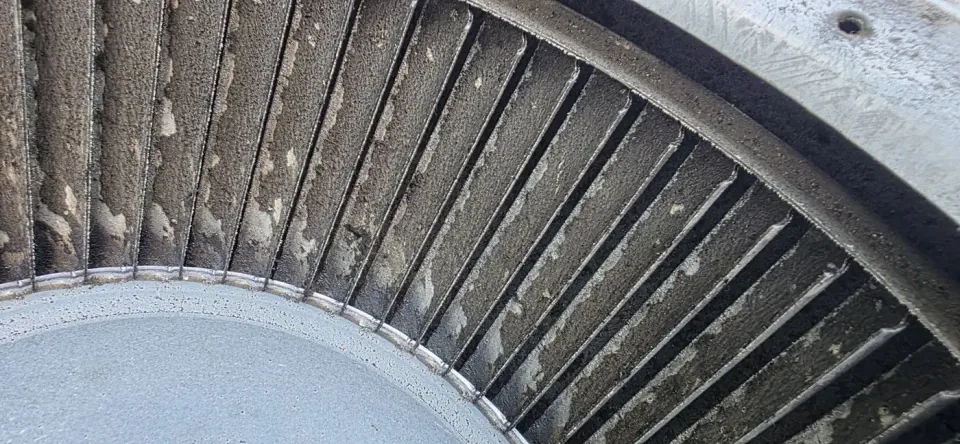
The blower wheel in the photo came from a system whose owner swore the AC "just got weak." Nothing was broken — every blade was carrying a fin of caked dust, cutting airflow enough to ice the coil and gut the cooling. We see the same story inside condensers packed with cottonwood and coils matted gray.
This is why our repairs include a hard look at airflow and cleanliness, and why the $99 tune-up exists: most July emergencies are visible in May to anyone who opens the panels and measures.
Good to know
We quote the diagnostic when you book the call, and it goes toward finding the actual fault — testing, pressures, and readings, not a glance and a guess. The repair itself is priced separately and approved by you before any work starts.
Usually, yes — we stock the common failure parts (capacitors, contactors, universal motors, drain fittings) on the truck, so most repairs finish in one trip. If a part has to be ordered, you will know the timeline before we leave.
Shut it off and let it thaw — running it iced can take out the compressor, which turns a modest repair into a major one. Ice means restricted airflow or a low charge; we will find which when we arrive.
A steady hum and fan noise, yes. Grinding, screeching, buzzing without the fan spinning, or a hard mechanical rattle, no — those are bearings, capacitors, or debris, and they are all cheaper to fix early.
Talk to a real local team about your heating, cooling, or indoor air problem — no call centers, no runaround.
Or email support@apex-climate-control.com · Financing available with credit scores as low as 550