
DuPage County · ZIP 60185
Dry air is also expensive: it makes the same temperature feel colder, so West Chicago homeowners nudge the thermostat up all winter to buy back comfort that humidity would have provided for less.
From homes near Reed-Keppler Park to the neighborhoods around Kline Creek Farm, we have mounted humidifiers on just about every furnace configuration West Chicago has to offer — a core of pre-war and mid-century homes near downtown plus newer neighborhoods to the west and south
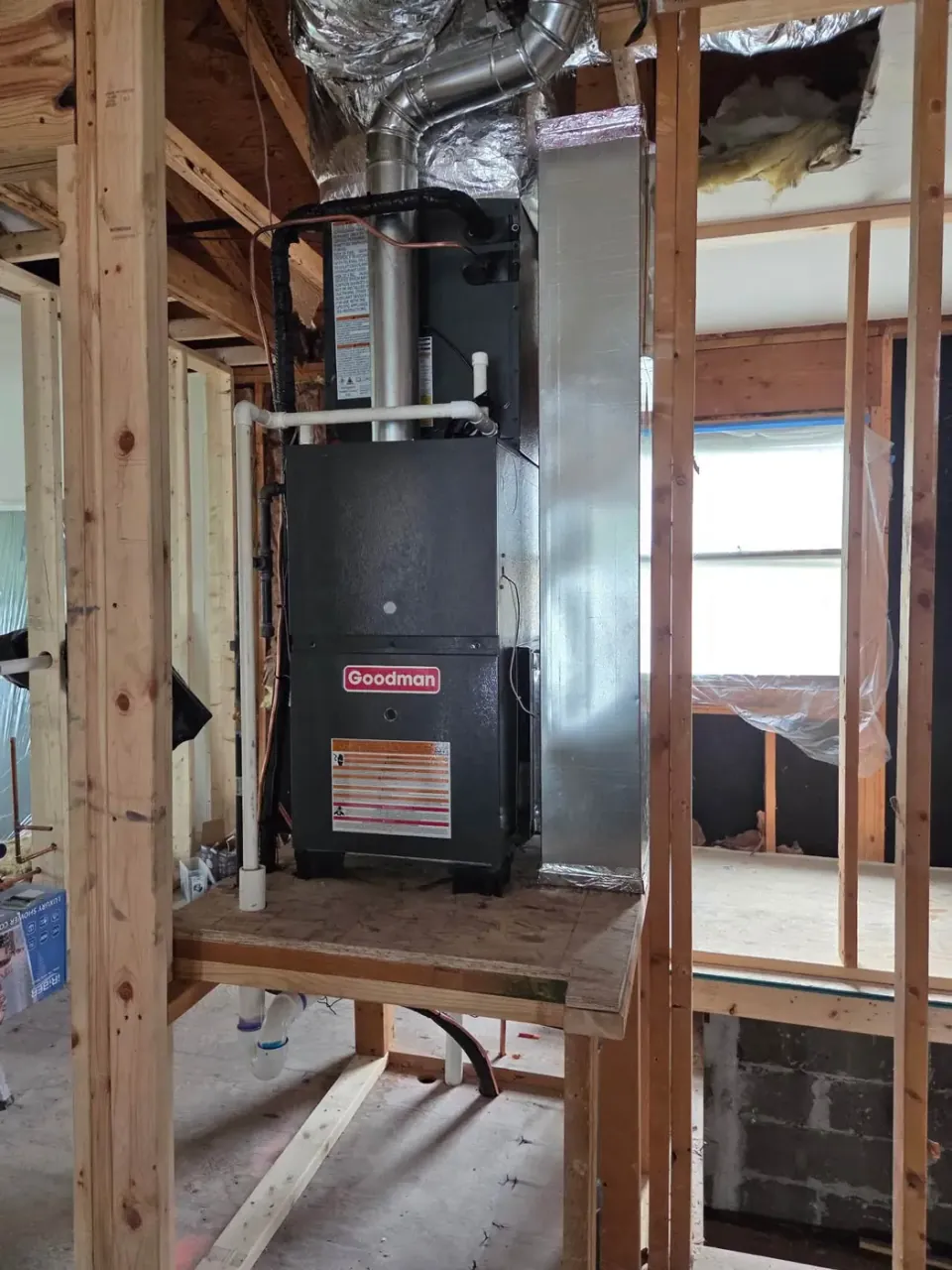
A whole-home unit mounts on your furnace or ductwork, taps a water line, and adds moisture to the air the system is already distributing — every room, automatically, controlled by a humidistat.
Winter in your West Chicago home probably needs a humidifier if:
What to expect when we add humidity control to your system:
The house picks the equipment: square footage, envelope tightness, and the furnace configuration determine whether a bypass unit covers it, a fan-powered model earns its extra output, or a steam system is what the size and tightness genuinely demand. Every option that fits arrives with its own written price. It is how we have built our name around West Chicago.
The unit mounts on the furnace plenum or return, the water line gets tapped with a proper saddle-free connection, the drain runs where code and gravity want it, and the humidistat wiring integrates with the system. Tidy work in the mechanical room is part of the job description.
We set the humidistat for the target range, verify output and drain operation through real cycles, and — where the control supports it — configure outdoor-temperature compensation so window condensation does not become the new problem. Ask any West Chicago customer who has watched us work.
Ownership comes down to two small things, and you leave knowing both: how the setting should ride down as outdoor temperatures fall, and the once-a-year pad or canister swap that keeps the unit healthy. A whole winter of better air for minutes of annual attention is the entire trade.
DuPage County cold snaps are when humidifiers earn their keep — and when the dial-in matters, because deep cold plus high humidity settings means condensation on windows. We set systems here for both realities.
The missteps that sour humidifier ownership:
What whole-home humidity costs in West Chicago:
What the quoted price includes matters as much as the number: ours covers the unit, the proper water connection, the code-compliant drain, the humidistat wiring, and the dial-in with cold-weather compensation — the whole working system, one visit, no follow-up surprises. A quote that is just a box on a plenum is a different product at a misleadingly similar price. We are about 23 minutes from our North Aurora shop, and the estimate is always free of surprises.
Real customers, real Google reviews
“The Apex Climate Control technicians are simply the BEST!”
“Great service and quality work, thanks!”
Good to know
Properly humidified air is genuinely easier on airways — dry air dries the nasal passages and throat, which is why so many DuPage County households wake up scratchy every January. Restoring the 30–40% range removes that irritant. We will not promise medical outcomes, but the morning difference is the change owners mention most.
The Illinois winter target is the 30–40% band: high enough to end the static, the dry sinuses, and the cold-at-70 feeling, low enough that windows stay clear on typical nights. Deep-cold stretches want the setting a few points lower — automatic on controls with outdoor compensation, which we configure at install.
Condensation is a settings story, not an equipment story: any humidifier cranked past what the outdoor temperature allows will fog glass, and any humidifier held to the proper seasonal band will not. The dial-in we do at installation — including automatic cold-weather compensation where supported — exists precisely to make the horror stories structurally impossible. Call 630-486-0401 and we will take it from there.
One main task: replace the water panel (or steam canister) annually, ideally at the start of heating season — it collects minerals all winter by design. Beyond that, a quick damper flip in spring and fall on bypass models. We can fold the annual service into fall furnace maintenance so it never gets forgotten. We are about 23 minutes from our North Aurora shop, so help is close.
A portable is a pet: daily feeding, weekly cleaning, one room of coverage. A whole-home unit is infrastructure: every room, automatic, one annual task. The crossover point is simple — anyone running two or more portables has already voted for the whole-home version and is just paying for it in chores.
The unit taps a nearby water line with a proper fitting (never the leak-prone saddle valves of DIY lore) and drains through a dedicated line, both installed to code. Water handled correctly is a non-event; that is exactly why the plumbing side of the install deserves a professional rather than an improvisation.
Three tools, three jobs. Bypass models are the economical workhorse for typical homes; fan-powered versions push more moisture without needing a bypass duct; steam systems bring the most muscle and run independent of furnace cycles, for large or tight houses that need it. Your house size and furnace setup pick the winner — and we quote what fits rather than what is fanciest.
One call reaches our local team — no national call center, no runaround. Serving West Chicago and all of DuPage County.
Or email support@apex-climate-control.com · Financing available with credit scores as low as 550