
Kane County · ZIP 60175
Heat pumps have finally grown into northern Illinois winters — and homeowners in Campton Hills are asking about them for good reason.
Apex Climate Control installs heat pump systems throughout Campton Hills — in the horse-country hills west of St. Charles — from our shop in North Aurora, about 21 minutes from our North Aurora shop.
Modern cold-climate units keep working in serious cold, but the honest engineering answer for many Kane County homes is hybrid: heat pump efficiency most of the season, gas backup for the brutal stretches.
Consider a heat pump quote if any of the following apply to your home:
From first visit to final commissioning, this is the process:
Everything starts with the building: envelope, windows, duct capacity, and electrical panel all get measured before a model number enters the conversation. Copying the old furnace's size is how heat pumps end up leaning on expensive backup heat all winter — sizing to the house is how they earn their reputation.
You get the honest comparison for your house: full cold-climate heat pump, dual-fuel hybrid with gas backup, or keep-the-furnace-and-wait. Balance points, backup heat, and operating cost estimates are explained in plain English, with written options at more than one price. It is the same standard we bring to every Campton Hills visit.
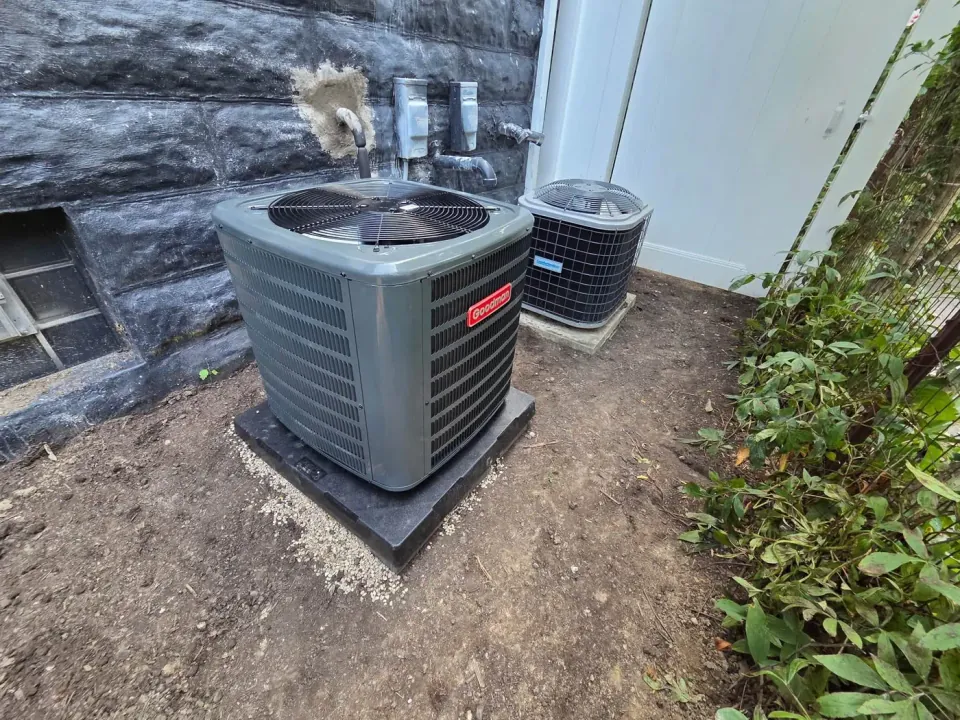
Outdoor unit set and elevated properly for snow and defrost drainage, line set pressure-tested and evacuated to spec, refrigerant charge weighed in, controls and any furnace integration wired correctly. Cold-climate performance is earned at install time or not at all. That is non-negotiable on our Campton Hills jobs.
Before we leave, the instruments confirm capacity and airflow, the changeover and auxiliary lockout points get set so backup heat behaves, the warranty gets registered, and you get the honest heat-pump orientation — milder supply air, defrost steam, longer run times — so nothing about the first winter surprises you.
The money conversation, Illinois edition:
The premium question deserves honesty: a cold-climate variable-speed heat pump costs meaningfully more than a basic AC — but it replaces two machines' worth of job, and if your AC was due anyway, the increment is smaller than the sticker suggests. Where the math gets genuinely exciting is replacing propane or electric-resistance heat, where operating savings can be dramatic. Every Campton Hills quote we write follows that rule.
From the older stock near the Corron Farm to newer construction toward LaFox and Wasco, Campton Hills homes bring different duct systems and electrical panels to the table — and both get evaluated before we recommend anything.
The missteps that create heat pump horror stories:
Real customers, real Google reviews
“The Apex Climate Control technicians are simply the BEST!”
“Great service and quality work, thanks!”
Good to know
The maintenance logic is simple: one compressor, zero off-seasons. Twice-yearly service (pre-heating and pre-cooling) is the ideal; annual is the floor. Coils, charge, defrost operation, and electrical all get verified — because a machine that never rests earns its checkups faster than any other equipment in the house.
A heat pump paired with a gas furnace, sharing the same ductwork. The heat pump handles cooling and most of the heating season efficiently; when outdoor temperatures drop past the changeover point, the furnace takes over automatically. For many Illinois homes it is the best of both — electric efficiency most of the year, gas muscle for the deep cold. That has held true on every Campton Hills job we have run.
That is a defrost cycle, and it is normal. Outdoor coils frost up in cold, humid weather; the unit periodically reverses briefly to melt it, producing a cloud of steam and sometimes a whooshing sound. Constant icing that never clears is a different story — that is a service call.
Ten to fifteen years is the honest range for year-round Illinois duty — the same compressor logs summer and winter hours, so the calendar moves faster than an AC's. Where you land in that range mostly comes down to two things: the quality of the original install and whether annual service actually happened.
Too many variables for an honest single number — capacity, cold-climate rating, all-electric versus dual-fuel, and what your electrical panel needs all move it. What you get instead: a written quote at multiple price points after we see the house, financing through Enhancify from a 550 credit score, and pointers to whichever federal credits and utility incentives your project qualifies for.
Usually, but it has to be verified — heat pumps move more air at lower temperatures than furnaces, so undersized or leaky ducts that a furnace muscled through will make a heat pump underperform. Duct evaluation is part of every quote we do; sometimes the honest recommendation includes fixing a duct problem first. If you are in Campton Hills, we can usually get eyes on it quickly.
Modern cold-climate heat pumps keep producing meaningful heat well below zero — the technology has genuinely changed in the last decade. That said, output drops as temperatures fall, which is why we design honestly: either a cold-climate unit sized with proper backup, or a dual-fuel system where a gas furnace takes the worst weeks. Both work in Kane County; the wrong choice is an undersized builder-grade unit with no plan for January.
One call reaches our local team — no national call center, no runaround. Serving Campton Hills and all of Kane County.
Or email support@apex-climate-control.com · Financing available with credit scores as low as 550