
Kane County · ZIP 60134
The heat pump question comes up in Geneva kitchens more every year: do they really work when it is ten below? The modern answer is better than most people expect.
North Aurora is home base — Geneva is about 13 minutes from our North Aurora shop — and we have measured, quoted, and installed enough systems in Kane County to know which heat pump setups genuinely make sense here.
For most homes here the sweet spot is a dual-fuel setup: the heat pump carries the mild and moderate weather efficiently, and the gas furnace takes over automatically when deep cold arrives.
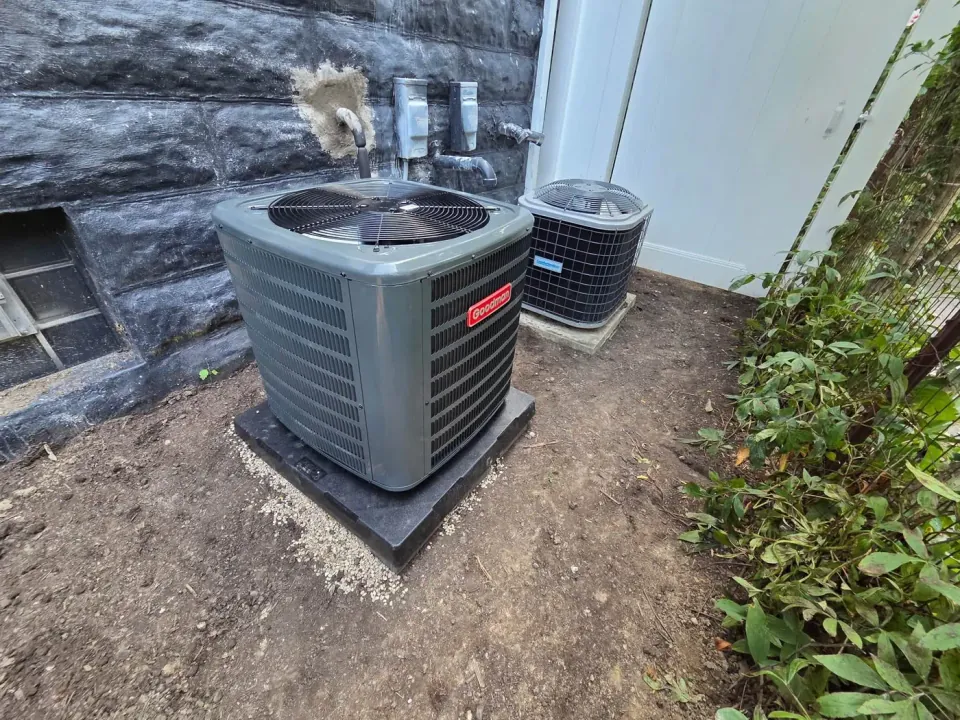
Here is when we find heat pumps make real sense for Geneva homeowners:
Our heat pump installs follow the same measured process everywhere in Kane County:
Everything starts with the building: envelope, windows, duct capacity, and electrical panel all get measured before a model number enters the conversation. Copying the old furnace's size is how heat pumps end up leaning on expensive backup heat all winter — sizing to the house is how they earn their reputation.
You get the honest comparison for your house: full cold-climate heat pump, dual-fuel hybrid with gas backup, or keep-the-furnace-and-wait. Balance points, backup heat, and operating cost estimates are explained in plain English, with written options at more than one price. It is how we have built our name around Geneva.
Install day is where ratings become reality: the outdoor unit elevated for snow and defrost runoff, lines pressure-tested and pulled to deep vacuum, the charge weighed to spec, and every control — furnace integration included — wired the way the engineering intends.
We verify capacity and airflow with instruments, set the changeover and auxiliary heat lockout points so backup heat runs only when it should, register the warranty, and walk you through the thermostat — heat pumps run differently than furnaces, and knowing that up front prevents the classic first-winter surprises. Ask any Geneva customer who has watched us work.
Geneva sits squarely in dual-fuel country: winters mild enough that a heat pump earns its keep most of the season, and cold snaps serious enough that honest backup planning matters. We configure systems here for both realities.
What to avoid on a heat pump project:
Honest heat pump pricing:
The dual-fuel economics hide a gift: if your existing gas furnace is healthy, it can often serve as the backup half of a hybrid system — meaning your heat pump budget buys the heat pump, not two machines. It is one of the most cost-effective paths into heat pump ownership in Kane County, and we always check for it before quoting the more expensive assumption. That policy has never once changed for a Geneva customer, and it will not start now.
Real customers, real Google reviews
“The Apex Climate Control technicians are simply the BEST!”
“Great service and quality work, thanks!”
Good to know
Usually — after the ducts pass a real evaluation. A heat pump breathes more air at gentler temperatures than the furnace it replaces, so marginal duct systems that a furnace muscled through become the visible bottleneck. Duct assessment rides along with every quote, and when repairs should come first, that is what the quote says. That has held true on every Geneva job we have run.
Yes — with the right equipment and design. Cold-climate models have transformed what heat pumps can do in deep cold, holding useful output well below zero. The engineering honesty: capacity still declines as temperatures drop, so the design must account for it — either proper cold-climate sizing with backup, or a dual-fuel pairing where gas handles the extremes. Done right, they work here; done carelessly, January exposes it.
It depends on what you heat with now. Replacing propane or electric-resistance heat, the savings are usually dramatic. Against natural gas, the answer moves with utility rates and how efficiently the system runs in cold weather — which is exactly why we run the comparison for your house and your rates instead of promising a universal answer.
Think of it as AC maintenance with double the stakes: the same coils, charge, and electrical checks, plus defrost operation — annually at minimum, ideally twice a year since it works both seasons. One compressor carrying the whole year's load is exactly the machine you want looked after.
A heat pump paired with a gas furnace, sharing the same ductwork. The heat pump handles cooling and most of the heating season efficiently; when outdoor temperatures drop past the changeover point, the furnace takes over automatically. For many Illinois homes it is the best of both — electric efficiency most of the year, gas muscle for the deep cold.
Defrost — and it is the system working correctly. Frost builds on the outdoor coil in cold, damp weather; the unit briefly reverses to melt it, and the meltwater flashes into a visible steam cloud. Normal, periodic, and nothing to fix. The problem version is ice that builds and never clears — that one gets a service call. It is one of the most common questions we get around Geneva.
Plan on roughly 10–15 years for a hard-working Illinois heat pump — it runs all year, so it accumulates hours faster than an AC that sleeps through winter. Quality installation and annual maintenance push you toward the top of that range; skipping both pulls you below it.
One call reaches our local team — no national call center, no runaround. Serving Geneva and all of Kane County.
Or email support@apex-climate-control.com · Financing available with credit scores as low as 550