
Indoor Air Quality · Fox Valley & western suburbs
Every Illinois winter, heated homes dry out to desert levels — and everything that contains moisture pays for it, including you. This is the one-visit fix.
Heat cold outdoor air and its relative humidity collapses — which is why by January, many Fox Valley homes are running indoor humidity in the teens. That's drier than most deserts, and the evidence is everywhere: static shocks off every doorknob, hardwood floors gapping, morning sore throats, nosebleeds, furniture joints working loose, and a house that feels cold at temperatures that were comfortable in October.
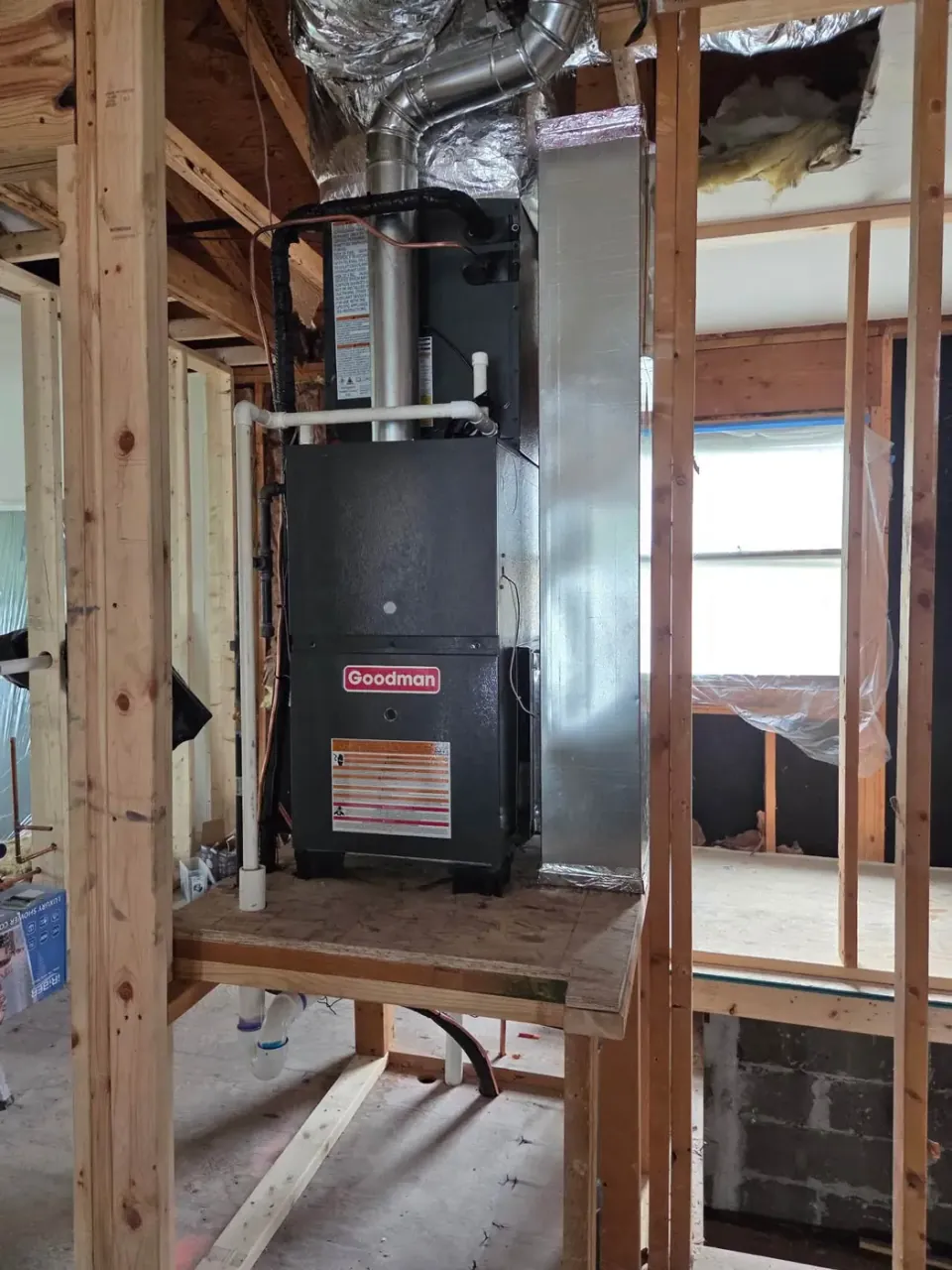
A whole-home humidifier ends the experiment. Mounted on the furnace or ductwork, plumbed to a water line, and controlled by a humidistat, it adds moisture to the air your system is already distributing — every room, automatically. No tanks to fill, no one-room bubbles of relief, no daily babysitting.
We install the three main types — bypass, fan-powered, and steam — and match the recommendation to your house rather than the price sheet. Then comes the step that separates a good install from a box on a plenum: the dial-in, where the target range gets set, cycles get verified, and cold-weather compensation gets configured so windows stay clear when the deep freeze hits.
The working range for an Illinois winter is roughly 30–40% relative humidity — enough to fix the dryness, low enough to keep windows condensation-free on typical nights. Deep-cold stretches want a few points lower, which controls with outdoor compensation handle automatically. Getting this right is why we don't consider the install finished until the system has been run, measured, and tuned.
The mold-and-condensation horror stories that follow humidifiers around belong to oversized units cranked to 50% and forgotten. Sized to the house and set to the range, a whole-home humidifier is one of the most reliably appreciated upgrades we install — the kind homeowners mention unprompted the following winter.
Good to know
Bypass units suit most typical homes economically; fan-powered adds capacity without a bypass duct; steam brings maximum output for large or tight homes and runs independent of furnace cycles. Your square footage, envelope, and furnace setup pick the winner — we quote what fits, not what's fanciest.
No — the damper gets flipped (or the control disables it) for cooling season, since summer air here carries plenty of moisture already. It's a two-second seasonal task on bypass models, and we'll show you.
The water usage is modest — these meter water into the airstream, not flood it. Most owners never notice it on the bill; what they notice is the thermostat sitting a degree or two lower for the same comfort.
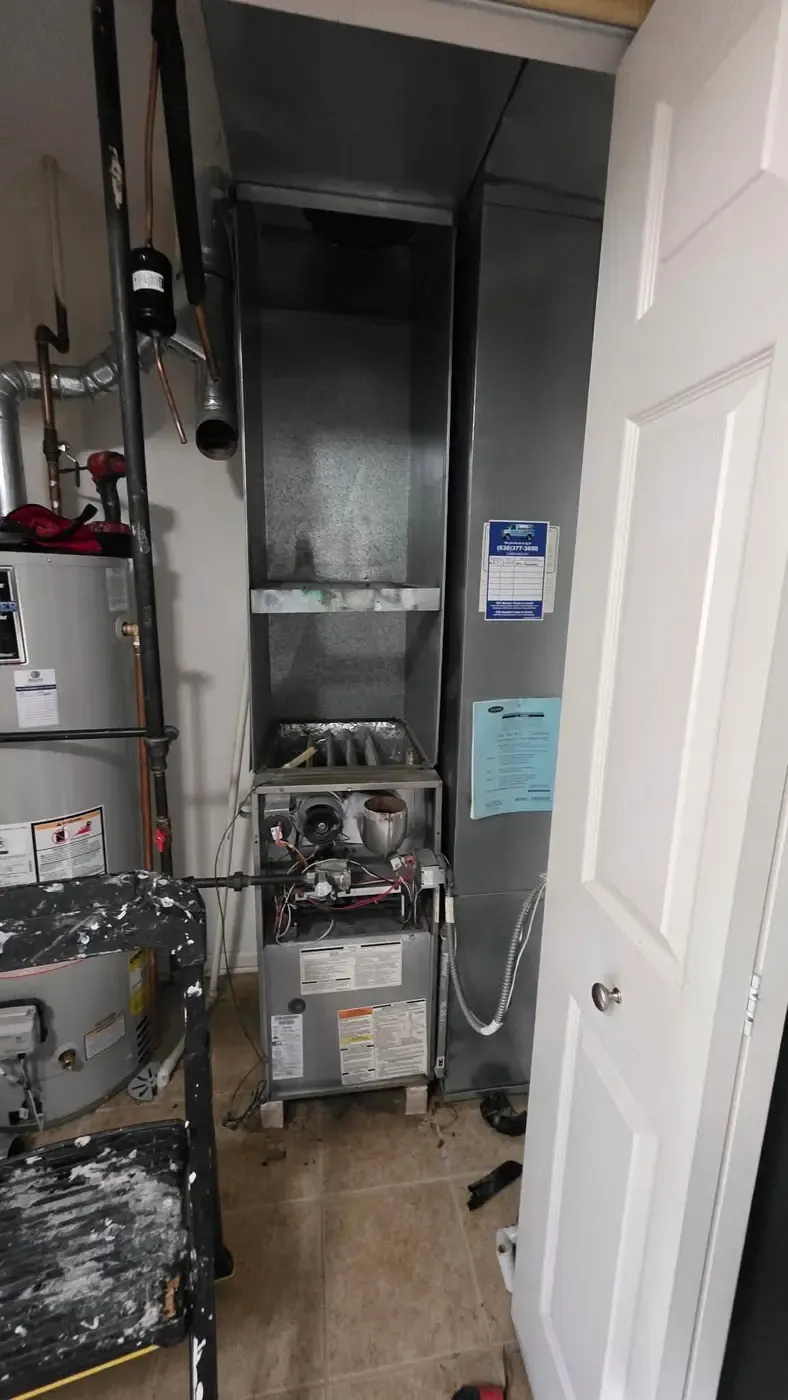
Nearly any forced-air system has a workable configuration — plenum, return, or steam placement. The site visit confirms mounting, water, and drain logistics, and quirky mechanical rooms are half of what makes this job interesting.
Talk to a real local team about your heating, cooling, or indoor air problem — no call centers, no runaround.
Or email support@apex-climate-control.com · Financing available with credit scores as low as 550