
Homeowner guide
Lint is engineered kindling — dry, fluffy, and fine. Pack it into a hot metal tube behind a machine that runs at 130 degrees, and you have the setup behind thousands of residential dryer fires every year. The good news: this is one of the cheapest fire risks in your house to eliminate.
Your dryer's lint screen catches only a fraction of what each load sheds. The rest rides the hot, moist exhaust air into the vent run — and every bend, sag, and rough joint gives it a place to settle. The duct narrows a little with every load. Airflow drops, heat lingers, drying times stretch, and the dryer's heating element works longer and hotter directly upstream of a growing fuel supply.
We routinely pull transition ducts out of local homes packed wall-to-wall with compressed lint — vents so blocked you couldn't blow through them. Every one was behaving normally enough that the homeowner hadn't called about a fire risk; they'd called because towels took two cycles.
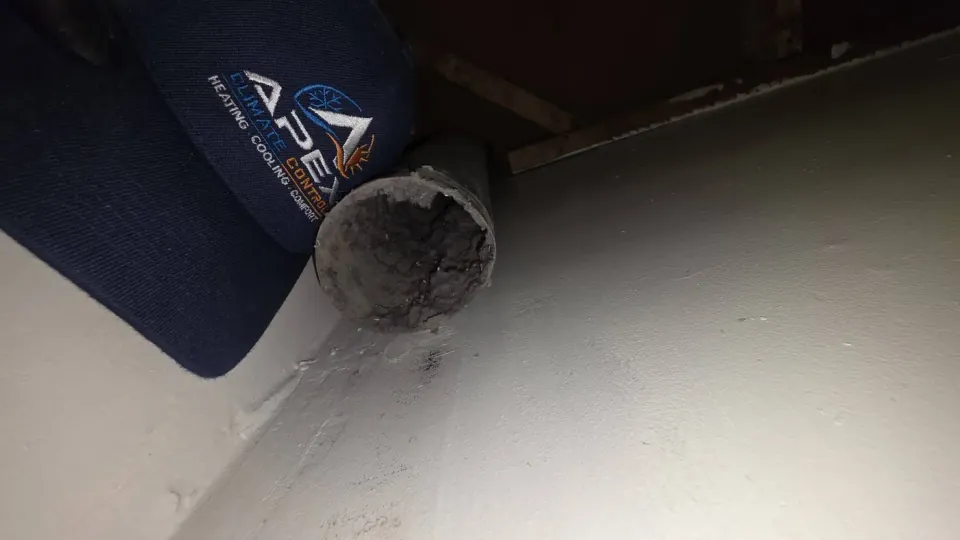
Cold weather works against dryer vents twice. First, warm moist exhaust meets freezing duct metal in exterior walls and attics, condensation forms, and damp lint packs harder and clings tighter. Second, exterior flaps stiffen, ice up, or get blocked by snow — restricting airflow at the very end of the run. The vents we open up in February are consistently the worst of the year.
The whole run gets cleaned — from the transition behind the machine, through the wall or ceiling duct, to the exterior termination — with rotary brushes and air tools. Then the camera goes in, which matters for two reasons: it verifies the run is genuinely clear end to end, and it catches the problems brushing can't fix — crushed sections, separated joints, plastic flex duct that shouldn't be there, and bird nests at the cap.
Once a year is the right rhythm for most households; big families and long vent runs deserve more. Most visits take under an hour, and the very next load of laundry proves the work. Call 630-486-0401 — and if you bundle with air duct cleaning, the pair is 15% off.
Talk to a real local team about your heating, cooling, or indoor air problem — no call centers, no runaround.
Or email support@apex-climate-control.com · Financing available with credit scores as low as 550