
Homeowner guide
Northern Illinois doesn't ease into winter — it arrives with a cold snap that puts every furnace in the region under full load within a week. Here's how to make sure yours is ready, split honestly between what you can do and what a tune-up covers.
The homeowner list keeps a healthy furnace healthy. The tune-up is how you find out whether it's actually healthy. A real maintenance visit is measured, not eyeballed: heat exchanger inspection, flame sensor and burner cleaning, ignition testing, blower amp draws, temperature rise against manufacturer spec, static pressure, safety-control operation, and a venting check.
Those measurements matter because furnaces fail on a curve, not a cliff. A hot-surface igniter reads weak months before it dies. A flame sensor accumulates a season of residue before it starts dropping the flame. Restricted airflow shows up in temperature rise long before the limit switch starts tripping. October readings catch what January exposes.
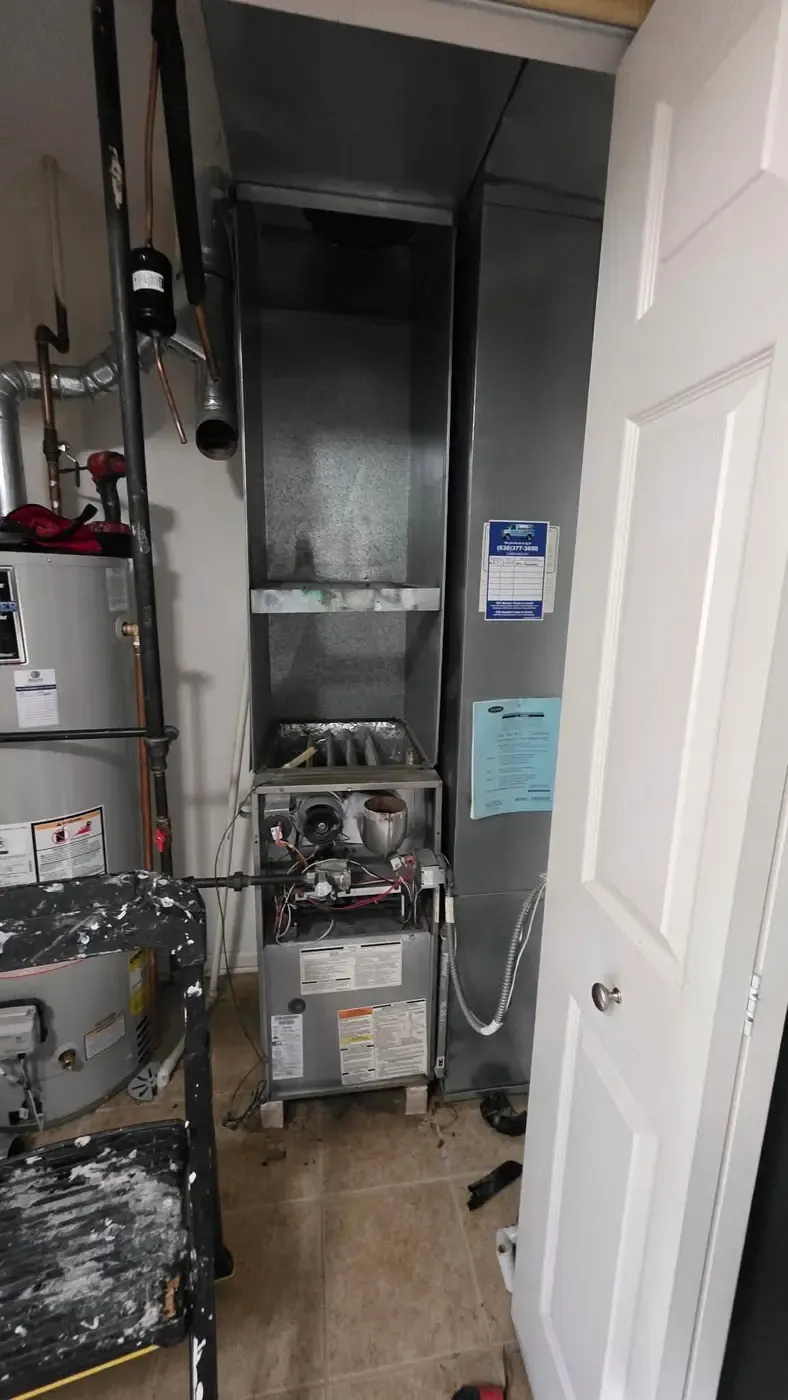
Gas furnaces earn one non-negotiable: the heat exchanger and venting inspection. A cracked exchanger or compromised vent can put combustion gases — including carbon monoxide — into the air your family breathes, and neither announces itself. This is the part of maintenance that isn't about comfort or efficiency at all, and it's the reason 'it seems to work fine' isn't the same as 'it's been checked.'
September and October are the window: the furnace gets verified before sustained load, and anything found gets fixed on your schedule instead of during the first freeze — when every HVAC company in the Fox Valley, ours included, is running flat out on emergencies. Call 630-486-0401 and get on the fall list early.
Talk to a real local team about your heating, cooling, or indoor air problem — no call centers, no runaround.
Or email support@apex-climate-control.com · Financing available with credit scores as low as 550