
Homeowner guide
The blower is running, air is moving, but it isn't cold. This exact complaint fills our summer schedule across Kane, DuPage, and Kendall Counties — and it almost always traces to one of five causes.
Confirm the thermostat is set to Cool (not Fan), set below room temperature. Check the furnace filter — a collapsed, filthy filter can cripple cooling on its own. And walk outside: is the condenser (the outdoor unit) actually running? That one observation splits the diagnosis in half.
The number-one summer part failure is the capacitor — the electrical component that gives the compressor and fan motor their starting kick. When it weakens, you'll often hear the outdoor unit hum or click every few minutes as it tries and fails to start, while the indoor blower cheerfully circulates warm air.
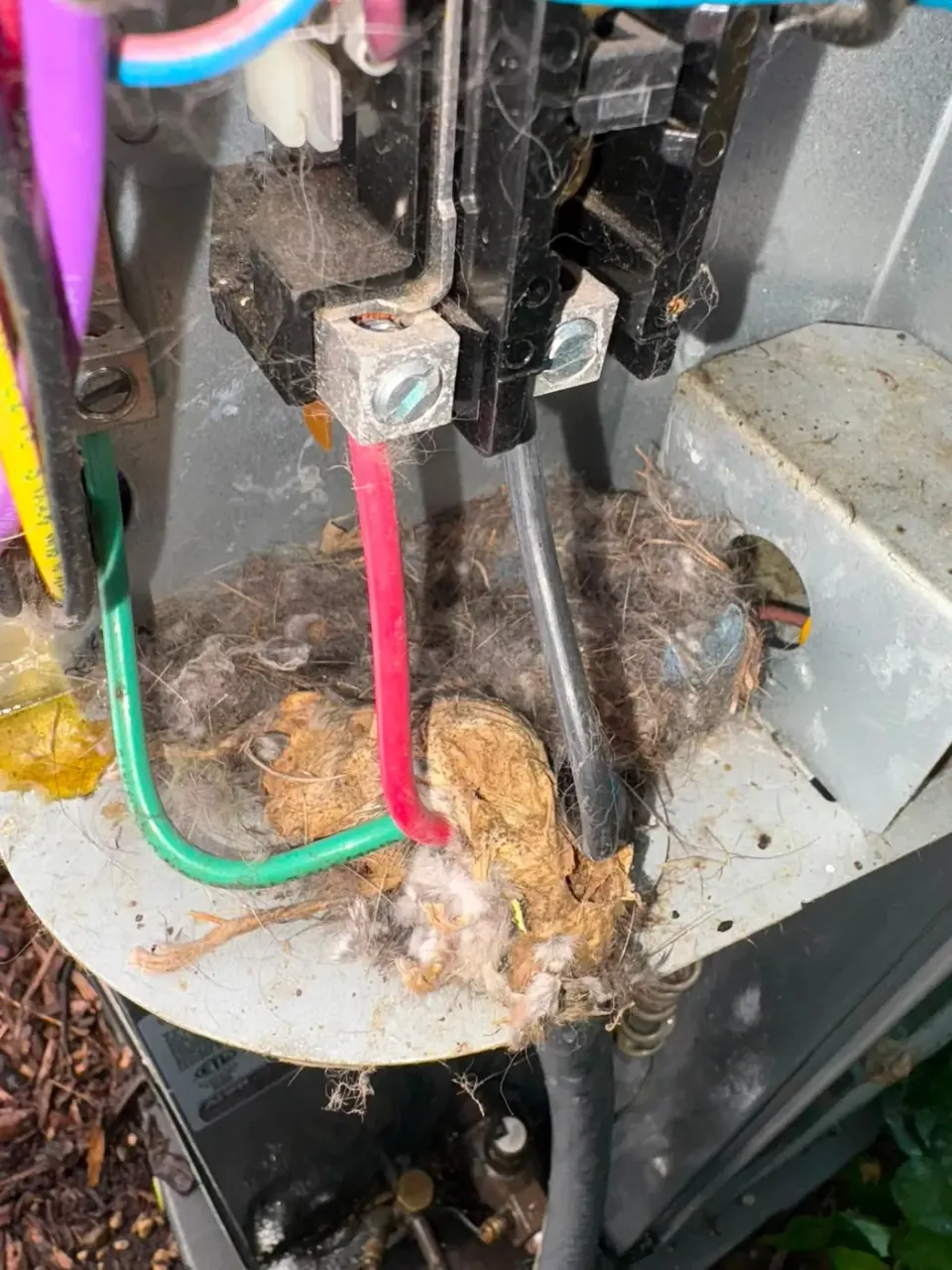
The contactor (the relay that switches power to the condenser) fails too — we've pulled them apart to find pitted contacts, dead insects, and in a couple of memorable cases, entire rodent nests packed into the disconnect box with the wiring chewed through. Electrical failures like these are typically same-visit repairs with parts we carry on the truck.
A condenser coil packed with cottonwood fluff, grass clippings, and dust can't reject heat — the system runs and runs while cooling capacity quietly collapses. In the Fox Valley, cottonwood season alone can blanket a coil in a couple of weeks. A proper coil cleaning restores capacity dramatically.
Low refrigerant from a leak behaves differently: cooling fades over days or weeks, the indoor coil may ice over (see below), and no amount of 'topping off' fixes the underlying leak. Refrigerant doesn't get used up — if it's low, it went somewhere, and the honest repair finds the leak first.
If you see ice on the copper lines or the indoor coil, shut the system off and let it thaw — running it iced can kill the compressor, the most expensive part in the system. Ice means the coil got too cold, which comes from restricted airflow (dirty filter or blower, blocked returns) or low refrigerant. After thawing, the cause still needs diagnosis; the ice will simply come back otherwise.
Warm-air complaints are diagnosable in one visit with a gauge set, a meter, and a thermometer. Guessing is what gets expensive. We test, show you the readings, and price the repair before work starts — and if the system is old enough that the repair doesn't pencil out, we'll say that plainly and show you the replacement math instead.
Call 630-486-0401 — during heat waves, no-cool calls jump our line.
Talk to a real local team about your heating, cooling, or indoor air problem — no call centers, no runaround.
Or email support@apex-climate-control.com · Financing available with credit scores as low as 550