
Homeowner guide
Almost every Fox Valley home has one: the room the heating and cooling never really reached. When homeowners finally decide to fix it, the choice usually comes down to extending the ductwork or going ductless — and the right answer depends on the room.
Bonus rooms over garages sit on top of unconditioned space with three exterior walls — they were always going to be the hardest room in the house. Additions often got a duct run teed off whatever trunk was nearby, with no thought to whether the system had capacity to spare. Sunrooms and converted attics frequently got nothing at all.
The common thread: the central system was sized and ducted for the original house, and the problem room is asking for capacity and airflow that were never designed in. That's why cranking the thermostat doesn't fix it — it just overshoots everywhere else.
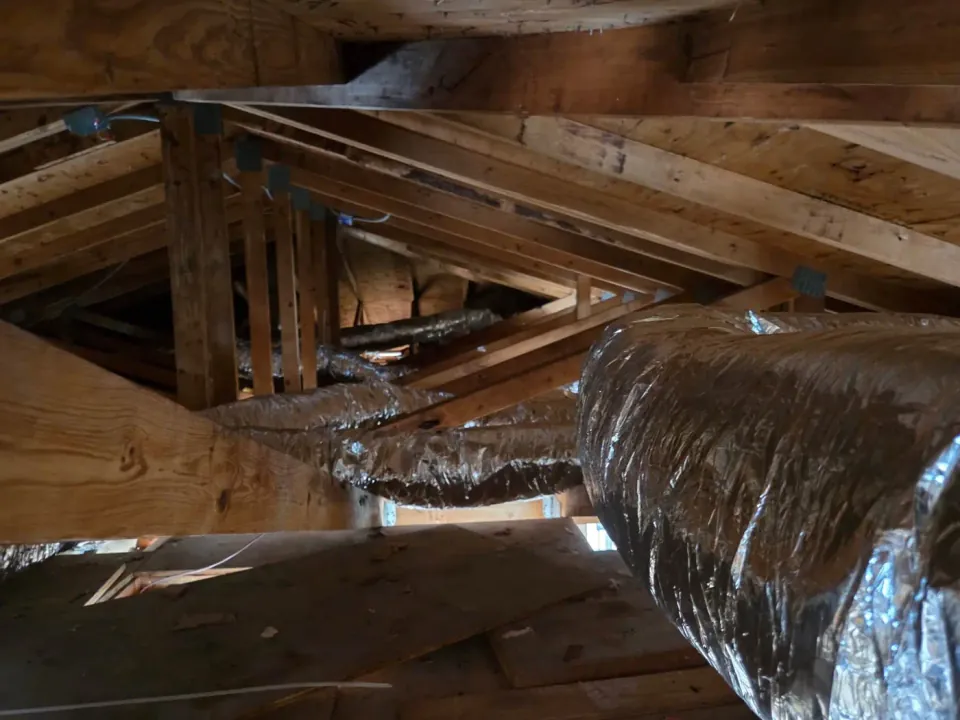
When the existing system has spare capacity, the room is close to an accessible trunk line, and the framing cooperates, a new duct run can be the clean answer — one system, one thermostat, no new equipment outside. It's often the right call during a larger remodel when walls and ceilings are already open.
The honest caveats: many systems don't have spare capacity (adding a room to a maxed-out furnace steals air from everywhere else), long runs through unconditioned attics lose heat exactly when you need it most, and the demolition-and-patch cost of routing ducts through finished space surprises people. We'll tell you which situation you have before you commit either way.
A ductless mini-split puts a small, dedicated heat pump on the problem room: an outdoor unit, a slim indoor head, and a refrigerant line through a three-inch wall penetration. No ducts, no duct losses, no opening ceilings, and the room gets its own thermostat — which matters enormously for spaces used on their own schedule, like offices and garages.
Modern cold-climate models heat through real Illinois winters, which is what made the heated garage and four-season sunroom routine projects. Installation is typically a single day, and the room's comfort no longer depends on a central system that was never designed for it.
The honest comparison takes about one site visit: we check your system's spare capacity, look at the routing realities, and price what actually fits. Sometimes that's a duct run; more often for the classic problem rooms, it's a right-sized ductless head. Call 630-486-0401 and describe the room — we've almost certainly fixed one just like it.
Talk to a real local team about your heating, cooling, or indoor air problem — no call centers, no runaround.
Or email support@apex-climate-control.com · Financing available with credit scores as low as 550