
Homeowner guide
Every January, Fox Valley homes quietly drop to humidity levels drier than Phoenix — and the evidence is everywhere: shocks off every doorknob, sore throats at 6 a.m., hardwood floors opening gaps you could lose a fork in. Here's why it happens and the whole-home fix.
Cold air physically can't hold much moisture. When your furnace pulls in 20-degree outdoor air — directly or through the leaks every house has — and heats it to 70, that air's relative humidity collapses into the teens or lower. Nothing 'went wrong'; it's just what heating cold air does, and the colder the stretch, the drier the house.
For reference, comfortable indoor air sits around 30–50% relative humidity. Many Illinois homes in deep winter measure 10–20% — genuinely drier than most desert afternoons.
Your body is the first casualty: dried nasal passages and sinuses (hello, morning sore throat and winter nosebleeds), skin and lips that no lotion keeps up with, aggravated eczema, scratchier eyes, and worse sleep. Dried mucous membranes also do their filtering job less effectively — one reason winter feels like one long cold for some households.
Dry air also feels colder than its temperature. Moisture evaporating off your skin pulls heat with it, and dry air evaporates aggressively — which is why 70 degrees in January feels chillier than 70 degrees in October, and why the thermostat creeps up all winter trying to buy back comfort that humidity would provide for less.
A whole-home humidifier mounts on your furnace or ductwork, taps a water line, and adds moisture to the air the system already distributes — every room, automatically, governed by a humidistat. Compare that to portable units: daily filling, weekly cleaning, one room of coverage, and a hard ceiling on output. Anyone running two portables has already voted for the whole-home version and is paying for it in chores.
Three main types cover different homes: bypass units (economical workhorse for typical houses), fan-powered (more output, no bypass duct needed), and steam (maximum capacity, runs independent of furnace cycles, suits large or tight homes). Sizing to the house picks the winner — it's the first thing we do on a quote.
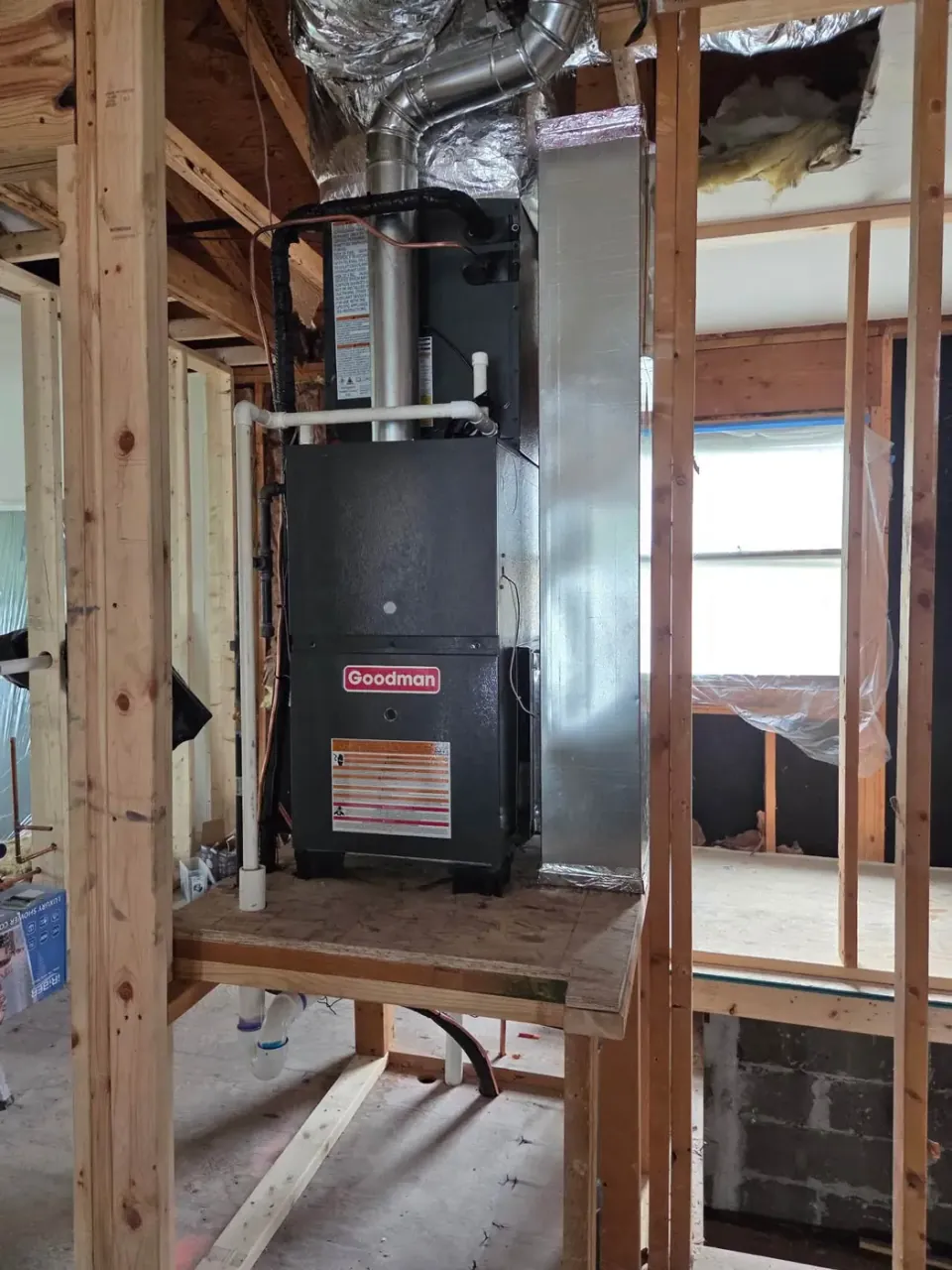
The working range for an Illinois winter is roughly 30–40% relative humidity: enough to end the static and the dryness, low enough to keep window condensation away on typical nights. During deep-cold stretches the setting should ease down a few points — automatic on controls with outdoor temperature compensation, which we configure at installation.
That dial-in step is what separates a great humidifier from a horror story. The mold-and-condensation reputation belongs to oversized units cranked to 50% and forgotten; sized and set correctly, a whole-home humidifier is one of the most reliably loved upgrades we install. It's typically a single-visit project — call 630-486-0401 and it can be done before the next cold snap.
Talk to a real local team about your heating, cooling, or indoor air problem — no call centers, no runaround.
Or email support@apex-climate-control.com · Financing available with credit scores as low as 550